

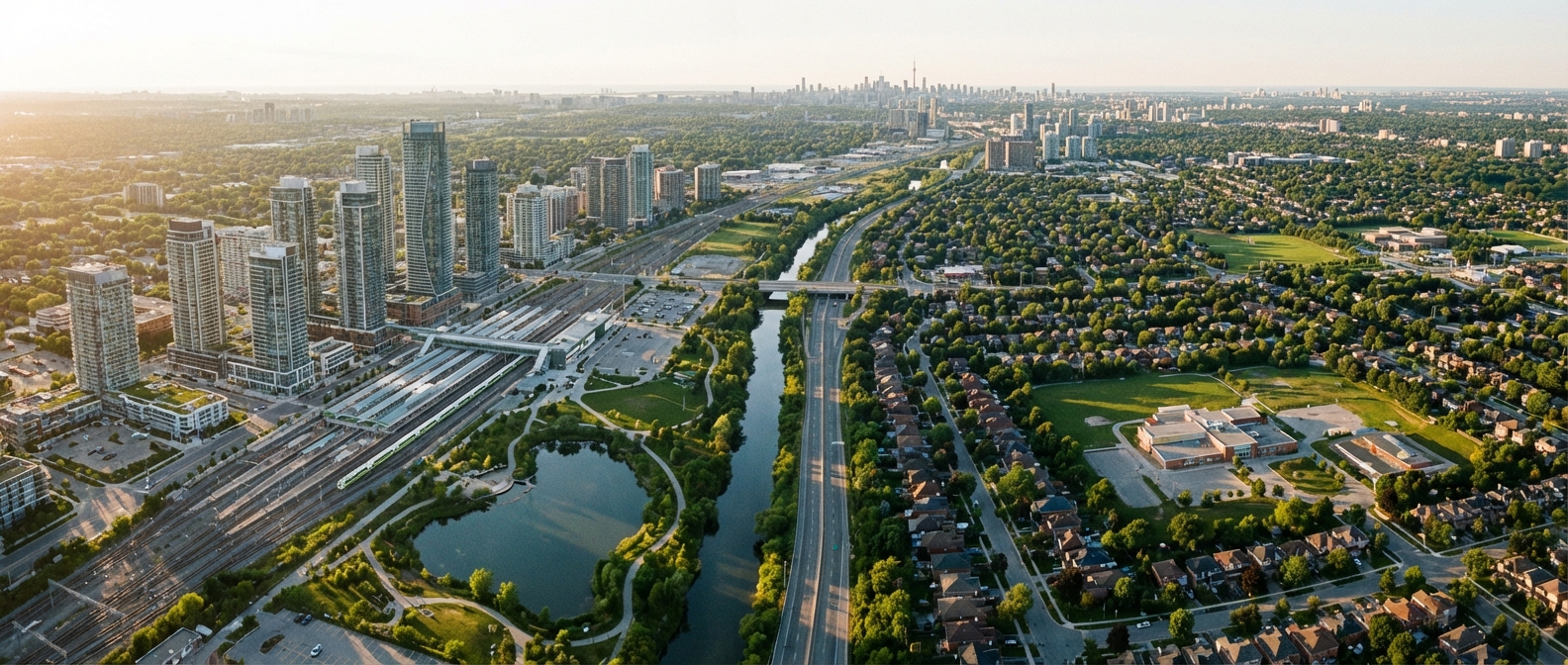
Richmond Hill vs Vaughan 2026: Which GTA City Is Right for You?
Condo123 · March 29, 2026
Richmond Hill vs Vaughan 2026: Which GTA City Is Right for You?
If you are searching for a home in the Greater Toronto Area, two cities north of the city consistently rise to the top of every shortlist: Richmond Hill and Vaughan. Both offer suburban living within striking distance of downtown Toronto, strong school systems, and thriving multicultural communities. But the similarities can make choosing between them genuinely difficult.
This in-depth guide compares Richmond Hill vs Vaughan across every factor that matters to buyers in 2026 — from real estate prices and transit infrastructure to walkability, dining, parks, and long-term investment potential. Whether you are a first-time buyer, a growing family, or a seasoned investor, you will find the data you need to make a confident decision.
Already know where you want to buy? Browse pre-construction projects across the GTA to see what is available right now.
Richmond Hill vs Vaughan at a Glance
| Category | Richmond Hill | Vaughan |
|---|---|---|
| Population (2026 est.) | ~320,000 | ~295,000 |
| Detached Home Price | $1.45M – $1.85M | $1.35M – $1.75M |
| Condo Price | $550K – $850K | $500K – $750K |
| Property Tax Rate | 0.6187% | 0.6520% |
| Walk Score | 6.5 / 10 | 5.8 / 10 |
| Major Transit | Yonge Subway Extension (2027) | VMC Subway, GO (Maple & Woodbridge) |
| Cultural Identity | Strong Asian dining & culture | Italian & Portuguese heritage |
| Key Attraction | Rouge Valley trails | Vaughan Mills outlet mall |
| Best For | Downtown commuters, walkability, food scene | Budget buyers, west-corridor commuters, master-planned communities |
Real Estate Prices: Richmond Hill or Vaughan for Better Value?
Price is typically the first filter buyers apply, and the numbers tell a clear story in 2026. Vaughan offers a modest but meaningful discount across both property types.
Detached Homes
In Richmond Hill, a detached home will generally cost between $1.45 million and $1.85 million, depending on the neighbourhood and lot size. Premium pockets like Bayview/Rouge Valley and Oak Ridges push toward the upper end of that range.
Vaughan detached homes sit between $1.35 million and $1.75 million. Woodbridge and Kleinburg command the highest prices, while areas like North Vaughan and Maple offer more room to negotiate. That translates to a potential saving of $100,000 or more on a comparable home.
Condominiums
The condo gap is equally significant. Richmond Hill condos range from $550,000 to $850,000, with newer builds near Richmond Hill Centre commanding premium prices. Vaughan condos start at roughly $500,000 and top out around $750,000, with the VMC area driving new supply at competitive price points.
For budget-conscious buyers — particularly first-time purchasers — Vaughan delivers more square footage per dollar. If you are navigating the purchase process for the first time, our first-time home buyer guide covers everything from down payments to closing day.
Property Taxes
Richmond Hill edges ahead on property taxes with a rate of 0.6187% compared to Vaughan at 0.6520%. On a $1.5 million home, that difference amounts to roughly $500 per year. It is not a deal-breaker, but it does partially offset the lower purchase prices in Vaughan over the long term.
Transit and Commuting: Getting Downtown and Beyond
Transit access is one of the most transformative differences between these two cities in 2026, and it is about to shift dramatically.
Richmond Hill Transit
The Yonge North Subway Extension is the headline story. Expected to open in 2027, this extension will bring rapid transit directly into Richmond Hill for the first time, connecting the city to the entire TTC subway network. For buyers purchasing now, this represents a once-in-a-generation opportunity to get in before the infrastructure premium fully materialises in property values.
Currently, Richmond Hill residents rely on YRT/Viva bus rapid transit along Yonge Street and Highway 7, plus GO bus connections. The subway extension will fundamentally change the commuting equation for anyone working in Midtown or Downtown Toronto.
Vaughan Transit
Vaughan already has its subway connection. The Vaughan Metropolitan Centre (VMC) station, the northern terminus of the TTC Line 1, has been operational since 2017. In addition, the city is served by two GO Transit stations — Maple and Woodbridge — on the Barrie and Kitchener lines respectively.
This makes Vaughan a stronger choice for west-corridor commuters heading toward Pearson Airport, Mississauga, or the Highway 400/407 employment zones. The existing GO infrastructure also provides reliable service for those commuting to Union Station.
The Verdict on Transit
If you work along the Yonge corridor or in downtown Toronto, Richmond Hill will soon offer a superior commute once the subway extension opens. If your employment is on the west side of the GTA or you need immediate rapid transit access today, Vaughan has the advantage.
Schools and Education: Where Do Families Thrive?
Both cities belong to the York Region District School Board (YRDSB) and the York Catholic District School Board, which are among the highest-performing boards in Ontario. However, Richmond Hill holds a slight edge in this category.
Richmond Hill Schools
Richmond Hill is home to several schools that consistently rank in the top tier of Ontario's EQAO assessments. The city has a strong concentration of high-performing public and Catholic elementary schools, and its secondary schools — including Richmond Hill High School and Bayview Secondary School — are well-regarded for both academics and extracurriculars.
The city also benefits from a large number of supplementary educational programmes, tutoring centres, and enrichment opportunities, reflecting the community's strong emphasis on academic achievement.
Vaughan Schools
Vaughan schools perform well by provincial standards, and the city has seen significant investment in new school construction to keep pace with population growth. Maple High School, Woodbridge College, and St. Joan of Arc Catholic High School are all respected institutions. However, Vaughan has fewer schools that consistently appear in the province's top rankings compared to Richmond Hill.
The Verdict on Schools
For families who prioritise school quality as a primary factor, Richmond Hill offers a marginally stronger portfolio. That said, both cities provide excellent educational outcomes, and the difference should be weighed alongside other lifestyle factors.
Walkability and Urban Design
Neither Richmond Hill nor Vaughan is a walkable city in the way that downtown Toronto is. Both are car-dependent suburban communities. However, there are meaningful differences in how their urban centres are developing.
Richmond Hill Walkability — Walk Score 6.5/10
Richmond Hill's higher walk score reflects the density along the Yonge Street corridor, where residents can access shops, restaurants, and services on foot. The Richmond Hill Centre area, in particular, is being redeveloped with mixed-use projects that will further improve pedestrian accessibility. The Yonge/Finch corridor also offers a relatively urban feel by suburban standards.
Vaughan Walkability — Walk Score 5.8/10
Vaughan's walkability is concentrated around the VMC development hub and the Highway 7 corridor near Concord. The VMC is a master-planned urban centre that will eventually become highly walkable, but much of the development is still in progress. Outside of these nodes, Vaughan is quintessentially suburban — wide streets, cul-de-sacs, and strip malls that require a car.
The Verdict on Walkability
Richmond Hill is the better choice for buyers who value being able to walk to daily errands and dining. Vaughan is catching up in its urban centres but remains more car-dependent overall.
Lifestyle, Dining, and Culture
This is where Richmond Hill and Vaughan diverge most noticeably, and the choice often comes down to personal taste.
Richmond Hill: A Foodie's Paradise
Richmond Hill has one of the most diverse and high-quality food scenes in the GTA outside of Toronto itself. The city's strong Asian dining culture means you will find exceptional Chinese, Korean, Japanese, Vietnamese, and Persian restaurants — many of which attract diners from across the region. From late-night hot pot to authentic dim sum, the variety is remarkable.
The city also has a vibrant cultural calendar, with events at the Richmond Hill Centre for the Performing Arts and community festivals throughout the year. The multicultural fabric of the city — with significant Chinese, Persian, and South Asian populations — creates a cosmopolitan atmosphere that feels distinct from other 905 communities.
Vaughan: Heritage and Entertainment
Vaughan's cultural identity is rooted in its Italian and Portuguese heritage, particularly in the Woodbridge neighbourhood. This translates to excellent Italian bakeries, trattorias, and delis, along with annual cultural events like the Woodbridge Fair.
For entertainment and shopping, Vaughan has a clear advantage with Vaughan Mills, one of Ontario's largest outlet shopping centres, as well as Canada's Wonderland. The city also offers newer entertainment complexes and family-oriented attractions that make it a strong choice for households with children.
The Verdict on Lifestyle
If dining diversity and a multicultural urban vibe are what you seek, Richmond Hill is the clear winner. If you favour a more traditional suburban lifestyle with strong entertainment options and heritage character, Vaughan will feel like home.
Parks, Nature, and Green Space
Access to nature is a major quality-of-life factor, and both cities deliver — though in different ways.
Richmond Hill Parks and Trails
Richmond Hill's crown jewel is the Rouge Valley, part of Canada's first national urban park. The Rouge National Urban Park offers kilometres of hiking and cycling trails through forests, wetlands, and farmland — a genuinely remarkable natural asset for a city of this size. The city also features Mill Pond Park, Phyllis Rawlinson Park, and the extensive trail network along the Oak Ridges Moraine.
For buyers who value nature and outdoor recreation, the eastern portions of Richmond Hill — particularly around Bayview/Rouge Valley and Oak Ridges — offer an almost rural sense of space while remaining minutes from urban conveniences.
Vaughan Parks and Green Space
Vaughan has invested heavily in municipal parks and recreation facilities. The Boyd Conservation Area along the Humber River is a favourite for hiking and fishing. Kortright Centre for Conservation provides excellent environmental education programmes. The city also has an extensive network of neighbourhood parks, sports fields, and community centres.
Kleinburg, in particular, offers a village-like atmosphere with easy access to the Humber River trails and the McMichael Canadian Art Collection — a unique cultural and natural combination.
The Verdict on Green Space
Richmond Hill wins on sheer natural scale thanks to the Rouge Valley and Oak Ridges Moraine. Vaughan offers well-maintained municipal parks and conservation areas that serve families well, but it does not match the wilderness experience available on Richmond Hill's eastern edge.
Investment Potential: Where Will Your Money Grow?
For buyers who are thinking about long-term appreciation and rental demand, both cities have compelling investment stories — but with different drivers.
Richmond Hill Investment Outlook
The Yonge North Subway Extension is the single most important investment catalyst in either city. Historical data from previous subway extensions in the GTA shows that properties within walking distance of new stations can appreciate 10 to 25 percent above the baseline market over a five-to-ten-year period following the announcement and completion of the line.
Buying in Richmond Hill before the 2027 opening — particularly near future station sites — positions investors ahead of this infrastructure premium. The city's strong school reputation also supports consistent rental demand from families.
Vaughan Investment Outlook
Vaughan's investment case centres on the VMC development hub, which is transforming from a greenfield site into a dense mixed-use urban centre. The volume of new condo supply in the VMC area means buyers can enter at lower price points, and the ongoing buildout of retail, office, and entertainment amenities will support long-term appreciation.
The city's proximity to major employment corridors — Highway 400, Highway 407, and the planned GTA West transportation corridor — also bodes well for sustained demand from professionals working outside of downtown Toronto.
For a broader view of where the market is heading, read our GTA real estate market forecast for 2026.
The Verdict on Investment
Richmond Hill offers the higher-upside play thanks to the subway extension, but at a higher entry price. Vaughan offers better value today with steady appreciation supported by infrastructure development. Investors who prioritise cash flow may favour Vaughan's lower condo prices, while those who prioritise capital appreciation may lean toward Richmond Hill.
Top Neighbourhoods in Richmond Hill
Not all parts of Richmond Hill are created equal. Here are the five areas that deserve your attention in 2026:
1. Richmond Hill Centre
The city's emerging downtown, centred around the future subway station. Expect a wave of new condo and mixed-use developments over the next several years. This is the best bet for investors and young professionals who want walkable urban living.
2. Leslie Grove
A family-friendly area with tree-lined streets, highly rated schools, and relatively quiet residential character. Detached homes here sit in the mid-range of the city's pricing spectrum, offering solid value for growing families.
3. Amberley / Oak Ridges
Located along the Oak Ridges Moraine, this area offers larger lots, newer construction, and proximity to nature trails. It is the premium choice for buyers who want a semi-rural feel without sacrificing access to city amenities.
4. Bayview / Rouge Valley
The city's most prestigious residential enclave, with large estate homes, proximity to the Rouge National Urban Park, and some of the best schools in the region. Prices here push toward the top of Richmond Hill's range, but the quality of life is exceptional.
5. Yonge / Finch Corridor
The southern gateway to Richmond Hill, this corridor offers the most urban character in the city. Good transit access, a mix of housing types, and proximity to both Richmond Hill and Toronto amenities make it a versatile choice for a range of buyer profiles.
Top Neighbourhoods in Vaughan
Vaughan is equally diverse in its neighbourhood offerings. Here are the five standout areas:
1. Vaughan Metropolitan Centre (VMC)
The city's answer to downtown — a dense, transit-connected urban hub anchored by the VMC subway station. This is the best location for condo buyers, investors, and anyone who wants to live in a modern, walkable environment. New developments are launching regularly, making it an ideal entry point.
2. Woodbridge
Vaughan's most established and character-rich neighbourhood, with strong Italian-Canadian heritage, charming streetscapes, and a mix of older homes and newer infill. Woodbridge offers a community feel that is hard to replicate in newer suburbs, along with some of the best Italian dining in the GTA.
3. Concord / Highway 7
A rapidly evolving area with a mix of commercial development and new residential projects. The Highway 7 corridor is becoming increasingly urbanised, with condos and mixed-use developments offering good value. Proximity to the VMC and major highways makes this area attractive for commuters.
4. North Vaughan / Maple
A family-oriented area with newer subdivisions, good schools, and a more affordable price point than southern Vaughan. Maple's GO station provides direct rail access to Union Station, making it a practical choice for professionals who commute downtown. The Maple neighbourhood also offers a charming historic main street.
5. Kleinburg
Vaughan's most exclusive neighbourhood, known for its village atmosphere, estate-sized lots, and proximity to the Humber River valley. Kleinburg is home to the McMichael Canadian Art Collection and attracts buyers who want a rural lifestyle within city limits. Prices are at the top of the Vaughan range, but the character is unmatched.
Buyer Profile Recommendations: Which City Fits Your Life?
The best city for you depends on where you are in life, what you value, and how you plan to use your home. Here is a breakdown by buyer type.
Young Families
Best choice: Richmond Hill — if school quality is the priority and you can stretch the budget. The combination of top-rated schools, excellent dining options, and the incoming subway extension makes Richmond Hill compelling for families planning to stay long-term.
Consider Vaughan — if you want a newer home with more space for the money. Areas like North Vaughan and Maple offer modern subdivisions with family-friendly amenities, good schools, and strong community programming at a lower price point.
Young Professionals
Best choice: Richmond Hill — if you commute along the Yonge corridor. The upcoming subway extension will slash commute times, and the Yonge/Finch and Richmond Hill Centre areas offer the most urban lifestyle in either city.
Consider Vaughan — if you work on the west side of the GTA or near the airport. The VMC provides an urban condo lifestyle with immediate subway access, and condo prices are more accessible than Richmond Hill's comparable offerings.
Retirees and Downsizers
Best choice: Richmond Hill — if you value walkability, dining, and cultural amenities. The ability to walk to restaurants, shops, and community events along Yonge Street provides a quality of life that does not require heavy reliance on a car.
Consider Vaughan — if you prefer a quieter, more established community with strong heritage character. Woodbridge and Kleinburg offer a relaxed pace of life with excellent green space and charming village atmospheres.
Real Estate Investors
Best choice: Richmond Hill — for capital appreciation. The subway extension is a generational infrastructure investment that will drive property values upward for years after completion.
Consider Vaughan — for cash flow and lower entry costs. The VMC condo market offers lower prices and strong rental demand from young professionals, making it easier to achieve positive cash flow from day one.
Regardless of which city you choose, securing a mortgage pre-approval before you begin your search will strengthen your negotiating position and help you act quickly in a competitive market.
Summary Comparison Table
| Factor | Richmond Hill | Vaughan | Advantage |
|---|---|---|---|
| Detached Home Prices | $1.45M – $1.85M | $1.35M – $1.75M | Vaughan |
| Condo Prices | $550K – $850K | $500K – $750K | Vaughan |
| Property Tax Rate | 0.6187% | 0.6520% | Richmond Hill |
| Walk Score | 6.5 / 10 | 5.8 / 10 | Richmond Hill |
| Subway Access | 2027 (Yonge Extension) | Available (VMC) | Vaughan (today) / Richmond Hill (2027+) |
| GO Transit | Limited | Maple & Woodbridge stations | Vaughan |
| School Quality | Excellent | Very Good | Richmond Hill |
| Dining & Food Scene | Exceptional (Asian cuisine) | Strong (Italian heritage) | Richmond Hill |
| Parks & Nature | Rouge Valley, Oak Ridges Moraine | Boyd Conservation, Kortright Centre | Richmond Hill |
| Shopping & Entertainment | Hillcrest Mall, local retail | Vaughan Mills, Canada's Wonderland | Vaughan |
| New Development Volume | Moderate | High (VMC hub) | Vaughan |
| Investment Upside | High (subway premium) | Moderate-High (VMC growth) | Richmond Hill |
| Best For | Downtown commuters, food lovers, families | Budget buyers, west-side commuters, investors | Depends on buyer |
Final Thoughts: Richmond Hill vs Vaughan in 2026
There is no universally correct answer to the Richmond Hill or Vaughan question. Both cities offer a high quality of life, strong communities, and real estate that — while not inexpensive — represents genuine value compared to Toronto proper.
Choose Richmond Hill if you prioritise school quality, dining diversity, walkability, and want to capitalise on the transformative impact of the Yonge North Subway Extension. You will pay a premium, but the lifestyle and investment fundamentals justify it for many buyers.
Choose Vaughan if you want more home for your money, prefer a west-corridor commute, value modern master-planned communities, or want to enter the market at a lower price point. Vaughan's VMC development is creating an exciting new urban centre, and the city's existing transit infrastructure gives it an immediate advantage over Richmond Hill.
Whichever city you are leaning toward, the next step is the same: explore available projects on Condo123 and start comparing what is on the market. The best deals do not last, and in a region as competitive as York Region, preparation is everything.
Frequently Asked Questions
Is Richmond Hill more expensive than Vaughan?
Yes, Richmond Hill is generally more expensive than Vaughan across both detached homes and condominiums. Detached homes in Richmond Hill range from $1.45 million to $1.85 million, compared to $1.35 million to $1.75 million in Vaughan. Condos follow a similar pattern, with Richmond Hill priced roughly $50,000 to $100,000 higher. However, Richmond Hill has a slightly lower property tax rate (0.6187% vs 0.6520%), which partially offsets the higher purchase price over time.
Which city has better transit access — Richmond Hill or Vaughan?
As of early 2026, Vaughan has the advantage with its existing VMC subway station and two GO Transit stations (Maple and Woodbridge). However, the Yonge North Subway Extension arriving in 2027 will bring rapid transit directly to Richmond Hill, dramatically improving commute times for residents working along the Yonge corridor or in downtown Toronto. If you need subway access today, Vaughan wins. If you can wait until 2027, Richmond Hill will offer a comparable or even superior connection.
Are schools better in Richmond Hill or Vaughan?
Both cities are served by the York Region District School Board, one of the highest-performing boards in Ontario. Richmond Hill has a slightly stronger concentration of top-ranked schools based on EQAO assessments, and the city's emphasis on academic enrichment programmes gives it a marginal edge. Vaughan schools are very good by provincial standards, and newer schools in growth areas are well-resourced. For most families, either city will provide an excellent education.
Which city is better for first-time home buyers?
Vaughan is generally the more accessible option for first-time buyers due to its lower price points, particularly in the condo market. The VMC area offers new-build condos starting around $500,000, which is more attainable for buyers entering the market. Richmond Hill condos start higher, though the Yonge/Finch corridor offers some competitive options. For guidance on navigating your first purchase, consult our first-time home buyer guide.
What is the best neighbourhood in Richmond Hill for families?
Leslie Grove and Bayview/Rouge Valley are widely considered the best family neighbourhoods in Richmond Hill. Leslie Grove offers tree-lined streets, excellent schools, and a quiet residential character at mid-range prices. Bayview/Rouge Valley is the premium option, with estate homes, top-tier schools, and direct access to the Rouge National Urban Park. Amberley/Oak Ridges is another strong choice for families who want larger lots and proximity to nature trails.
What is the best neighbourhood in Vaughan for investment?
The Vaughan Metropolitan Centre (VMC) is the strongest investment neighbourhood in Vaughan. Its subway connectivity, ongoing mixed-use development, and growing population of young professionals create strong rental demand and long-term appreciation potential. The area is still early in its development cycle, meaning buyers who enter now can benefit from the infrastructure buildout over the coming decade. Concord/Highway 7 is a secondary option with good value and improving amenities.
Will the Yonge subway extension increase Richmond Hill property values?
Historical precedent from previous GTA subway extensions strongly suggests that it will. Properties within walking distance of new subway stations have historically appreciated 10 to 25 percent above the baseline market over a five-to-ten-year period. The Richmond Hill Centre area, which will be closest to the new stations, is expected to see the most significant impact. Buyers who purchase before the 2027 opening are positioned to benefit from this infrastructure premium as it materialises. For more on market trends, see our GTA market forecast.